Research Article
Aim & Scope
Hittite Journal of Science and Engineering is an international, peer-reviewed, multidisciplinary, periodical journal containing original research papers and review articles in English.
Hittite Journal of Science and Engineering publishes from a wide variety of sources dealing with all aspects of science and engineering.
Author Guidelines
The manuscripts that are sent to be evaluated for publication in the Hittite Journal of Science & Engineering would be prepared according to the rules stated below:
1) Manuscripts should be in English. The text should be in a single-column format as a Microsoft Word document. Download the Manuscript Template and Copyright Transfer Form.
2) The title of the article is to be written first in bold with font size 12. The title should be concise and informative. Avoid abbreviations and formulae where possible.
3) Author(s’) name(s), name of the current institution, department name and e-mail address are to be filled in on the online registration form. Clearly indicate who will handle correspondence at all stages of refereeing and publication, also post-publication. Ensure that phone numbers (with country and area code) are provided in addition to the e-mail address and the complete postal address. Contact details must be kept up to date by the corresponding author.
4) A concise and factual abstract is required. The abstract should state briefly the purpose of the research, the principal results, and major conclusions. Abstracts should not exceed 250 words.
5) A Graphical abstract is optional and should summarize the contents of the article in a concise, pictorial form designed to capture the attention of a wide readership online. The authors must provide images that clearly represent the work described in the article. Graphical abstracts should be submitted as a separate file in the online submission system. Preferred file types: TIFF, EPS, PDF files.
6) Authors are invited to submit keywords (5 to 7) associated with their papers.
7) Divide your article into clearly defined and numbered sections. Subsections should be numbered 1.1 (then 1.1.1, 1.1.2, ...), 1.2, etc. (the abstract is not included in section numbering). Use this numbering also for internal cross-referencing: do not just refer to 'the text'. Any subsection may be given a brief heading. Each heading should appear on its own separate line.
8) The structure of the manuscript followed after the abstract should be as follows:
Introduction: State the objectives of the work and provide an adequate background, avoiding a detailed literature survey or a summary of the results. Material and methods: Provide sufficient detail to allow the work to be reproduced. Methods already published should be indicated by a reference: only relevant modifications should be described.
Theory/calculation: A Theory section should extend, not repeat, the background to the article already dealt with in the Introduction and lay the foundation for further work. In contrast, a Calculation section represents a practical development from a theoretical basis.
Results: Results should be clear and concise.
Discussion: This should explore the significance of the results of the work, not repeat them. A combined Results and Discussion section is often appropriate. Avoid extensive citations and discussion of published literature.
Conclusion: The main conclusions of the study may be presented in a short Conclusions section, which may stand alone or form a subsection of a Discussion or Results and Discussion section.
Appendices: If there is more than one appendix, they should be identified as A, B, etc. Formulae and equations in appendices should be given separate numbering: Eq. (A.1), Eq. (A.2), etc.; in a subsequent appendix, Eq. (B.1) and so on. Similarly for tables and figures: Table A.1; Fig. A.1, etc.
Acknowledgments: Collate acknowledgments in a separate section at the end of the article before the references. List here those individuals who provided help during the research (e.g., providing language help, writing assistance or proofreading the article, etc.).
9) Number tables consecutively in accordance with their appearance in the text. Place footnotes to tables below the table body and indicate them with superscript lowercase letters.
10) Make sure you use uniform lettering and sizing in the figures. Aim to use the following fonts in your illustrations: Arial or Times New Roman. Number the illustrations according to their sequence in the text. Use a logical naming convention for your artwork files. Size the illustrations close to the desired dimensions of the printed version. Submit each illustration as a separate file. Please make sure that artwork files are in an acceptable format (TIFF (or JPEG), EPS (or PDF)) and with the correct resolution (keep to a min. of 300 dpi).
11) Please ensure that every reference cited in the text is also present in the reference list (and vice versa). Any references cited in the abstract must be given in full.
Reference links: Increased discoverability of research and high-quality peer review are ensured by online links to the sources cited. In order to allow us to create links to abstracting and indexing services, such as Scopus, CrossRef and PubMed, please ensure that data provided in the references are correct. Please note that incorrect surnames, journal/book titles, publication year and pagination may prevent link creation. When copying references, please be careful as they may already contain errors. The use of the DOI is encouraged.
Web references: As a minimum, the full URL should be given and the date when the reference was last accessed. Any further information, if known (DOI, author names, dates, reference to a source publication, etc.), should also be given. Web references can be listed separately (e.g., after the reference list) under a different heading if desired, or can be included in the reference list.
Reference formatting: For in-text citations, (which appear within the text) use a citation number in a square bracket. A reference list at the end of the text (which provides full details of all references cited in-text) is also required in accord with the following examples:
Reference to a journal publication: [1] Van der Geer J, Hanraads JAJ, Lupton, RA. The art of writing a scientific article. Journal of Science Communication 163 (2010) 51–59.
Reference to a conference proceeding: [2] Wilkinson, R. Sociology as a marketing feast, in: Collis M, Munro L, Russell S (Eds.). Sociology for the New Millennium. Paper presented at The Australian Sociological Association, Monash University, Melbourne, 7-10 December. E-Publishing Inc., New York, pp. 281–304, 2009.
Reference to a book: [3] Strunk JrW, White EB. The Elements of Style, fourth ed. Longman, New York, 2000. Reference to a chapter in an edited book: [4] Mettam GR, Adams LB. How to prepare an electronic version of your article, in: Jones BS, Smith RZ (Eds.). Introduction to the Electronic Age. E-Publishing Inc., New York, pp. 281–304, 2009.
Journal abbreviations source Journal names should be abbreviated according to the List of Title Word Abbreviations: http://www.issn.org/services/online-services/access-to-the-ltwa/
12) To present the last form of the article organized according to the publication rules before the publication process is in the author’s charge; the articles are not published unless they are presented in the appropriate text format.
Ethical Principles and Publication Policy
Open Access Policy
Articles are freely available to both subscribers and the wider public with permitted reuse. All articles published in Open Access will be immediately and permanently free for everyone to read and download. Permitted reuse is defined by Creative Commons user license:
Creative Commons Attribution (CC BY): lets others distribute and copy the article, to create extracts, abstracts, and other revised versions, adaptations or derivative works of or from an article (such as a translation), to include in a collective work (such as an anthology), to text or data mine the article, even for commercial purposes, as long as they credit the author(s), do not represent the author as endorsing their adaptation of the article, and do not modify the article in such a way as to damage the author's honor or reputation.
Retraction and Correction Policy
HJSE publishes corrections for errors, made by the journal or authors, of a scientific nature that do not alter the overall basic results or conclusions of a published article. HJSE articles may be retracted by their authors or by the editor because of pervasive error or unsubstantiated or irreproducible data. Articles may be retracted, for example, because of honest error, scientific misconduct, or plagiarism. Errata are published at the discretion of the editors and appear as formal notices in the journal.
Publishing Ethics
HJSE is committed to the highest standards of research and publication ethics. Editors will act in accordance with the COPE guidelines if any ethical misconduct is suspected.
Price Policy
Hittite Journal of Science and Engineering publishes all its articles in full open access, meaning unlimited use and reuse of articles, in addition to giving credit to the authors. All our articles are published under a Creative Commons (CC BY) license.
Authors pay NO Article Processing Charge (APC) to cover the costs of submission or peer review administration and management, professional production of articles in PDF, and dissemination of published papers in various venues, in addition to other publishing functions.
Indexes




Journal Boards
Editor-in-Chief
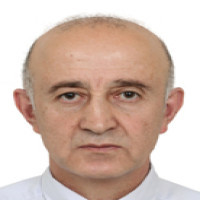






Ali Kilicarslan graduated from the Middle East Technical University’s Gaziantep Campus in 1989 with a Bachelor Degree in Mechanical Engineering. He received an Master of Science in Mechanical Engineering in 1994 and a PhD of Mechanical Engineering in 2000 from Istanbul Technical University. He is the Editor in Chief of Hittite Journal of Science and Engineering He is a Professor at the Department of Mechanical Engineering, Hitit University, Corum, Turkey, teaching Advanced Thermodynamics, Energy and Exergy Analysis of Thermal Systems, Thermodynamics, Refrigeration and Air Conditioning. His research areas are based on thermal systems, refrigerants and refrigeration systems, air-conditioning systems, heating systems, alternative and renewable energy systems, gas-fired pulse combustion, cogeneration and trigeneration systems, gas and vapor cycles, experimental and theoretical analyses thermodynamic cycles. He supervised 12 M.Sc. and 1 Ph.D. theses. He published 50 scientific papers in international journals and conferences and also published 26 scientific papers in national journals and conferences. He was Director of the Graduate School of Natural and Applied Sciences between the years of 2008 and 2017. He also served as a Dean of Engineering Faculty and Department Chair of Mechanical Engineering between the years of 2015 and 2021.
Associate Editors

Dr. Öncü Akyıldız is currently an Associate Professor in the Department of Metallurgical and Materials Engineering at the Hitit University. He completed his Ph.D. at the Middle East Technical University (METU), Ankara, Turkey, with his dissertation on modeling and computer simulation of microstructural evolution in polycrystalline thin films for microelectronics exposed to severe operating conditions. Dr. Akyıldız won the best dissertation awards in 2004 and 2011 by METU. After that, he joined the Department of Materials Science and Engineering at the University of Michigan as a postdoctoral visiting scholar, where he worked on modeling and computer simulation of microstructural evolution in phase separating positive electrodes for secondary lithium-ion batteries. His research interests cover the diffusion-controlled movement of solid surfaces and interfaces, computational thermodynamics, kinetics, and mechanics in materials modeling and simulation applied to directed energy deposition additive manufacturing.
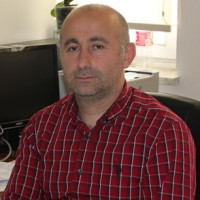
Dursun Ali KÖSE was born in Samsun Terme. He completed his undergraduate and graduate studies at Kars Kafkas University, Department of Chemistry, with his thesis titled "Synthesis of Nicotinamide and Diethylnicotinamide Complexes of Acetylsalicylates and Investigation of their Structures". Doctor title: Prof. Dr. He received his thesis title "Preparation and Structure Investigation of Biopotent Boron Compounds with Hydroxy-Functionalized Organic Molecules" at Hacettepe University, Department of Inorganic Chemistry, under the supervision of Birgül KARAN in 2008. Between 2009 and 2010, he worked as Research Assistant at Kafkas University, Department of Chemistry. See Dr. After working as an assistant at Çorum Hitit University, Department of Chemistry. Assoc. Dr. was appointed as. In 2010, for postdoctoral studies, Prof. Dr. It was found in Mike Becket's laboratories at the Bangor/Wales School of Chemistry. He received the title of Associate Professor at Hitit University in 2013 and the title of Professor at the same University in 2018.
Köse has around 140 scientific articles scanned by international indexes, around 90 papers presented at international conferences, and his studies on metal complexes and boron esters of biologically active ligands continue. He also has studies in the fields of Environment and Waste Management and Occupational Health and Safety.
Section Editors
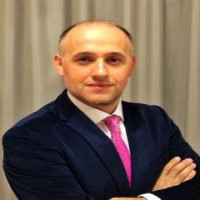
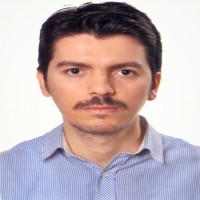
Dr. Akif AKGUL was born in Izmir, Turkey. Dr. AKGUL received his B.S. degree in Electronics-Computer Education from Kocaeli University in 2009 and in Electrical-Electronics Engineering from Sakarya University in 2013, M.S. and Ph.D. degrees from Sakarya University in 2011 and 2015, respectively, in Electronics-Computer Education and Electrical-Electronics Engineering. His Ph.D. thesis work was on chaos-based cryptology. He has been to The Institute of Electronics, Communications and Information Technology (ECIT) of Queen's University Belfast, United Kingdom in 2015 as a Visiting Researcher. His current research interests include random number generators, cryptology, data hiding, blockchain, IoRT, chaos-based engineering applications. Currently, he is Associate Professor at the Department of Computer Engineering, Faculty of Engineering, Hitit University, Turkey, where he has been involved in projects concerning the study of chaos-based applications.

Board of Editors
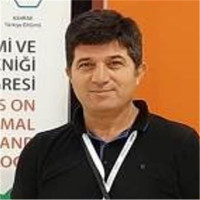
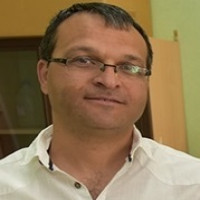

Yuehong Su is a Professor of Thermal Science and Building Technology at the Department of Architecture and Built Environment, University of Nottingham. He has over 30 years research experience in heat pump, air conditioning, adsorption/absorption/ejector cooling, desalination, energy efficiency, heat storage, solar concentration, PV/thermal, daylighting, natural ventilation and low carbon buildings. He has worked on a number of projects funded by the EPSRC, EU, Innovate UK, NSFC and industry and has published over 180 papers in refereed journals and conferences. He has been the supervisor/co-supervisor of over 30 PhD students and postdoctoral researchers. He teaches Engineering Thermodynamics, Air Conditioning Technology, Daylighting and Solar Architecture Modelling, and he is the Course Director for MSc Sustainable Energy and Entrepreneurship. Prof Su has recently supervised several Marie Curie International Incoming Fellowship projects and jointly managed one FP7 ICARUS project and several EPSRC and Innovate UK projects on sustainable energy technologies.

Prof. Dr. Adil Baykasoglu received his B.Sc., M.Sc. and Ph.D. degrees from Mechanical and Industrial Engineering areas in Turkey (Gaziantep) and England (Nottingham). He is presently a full Professor at the Industrial Engineering Department at the Dokuz Eylul University. He has published numerous academic papers, 3 books and edited several conference books on operational research, computational intelligence, engineering management, and manufacturing systems design. He is also an active editor and referee for many scientific journals.

Dr. Celebi is a senior researcher at TU Wien, working on the molecular-scale surface and interface physics related phenomena such as adsorption at interfaces, transport in nanochannels, coatings, adhesion, friction and so forth. He uses computational approaches at different time- and length-scales such as molecular dynamics, Monte Carlo, density functional theory, and finite element analysis. He received his PhD in mechanical engineering from Southern Methodist University, USA. His PhD thesis aimed to explore liquid transport in nano-scale confinements using molecular simulations. After his PhD, he worked as a postdoctoral researcher at Engineering Thermodynamics, TU Delft in Netherlands, focusing on the design, development and characterization of green solvents such as ionic liquids and deep eutectic solvents. Then, he joined Applied Interface Physics group in TU Wien as a computational-sub group leader.
Ali Elkamel – Biography
Ali Elkamel is a Professor of Chemical Engineering at Khalifa University and currently serves as the Acting Chair of the Department of Chemical and Petroleum Engineering. Prior to this role, he spent more than 22 years at the University of Waterloo in Ontario, Canada, where he is now a Professor Emeritus. His academic journey includes appointments at the University of Wisconsin–Madison, Kuwait University, Procter & Gamble, and Purdue University, where he completed his postdoctoral fellowship.
Prof. Elkamel holds a BSc in Chemical Engineering and a BSc in Mathematics from the Colorado School of Mines, an MSc in Chemical Engineering from the University of Colorado–Boulder, and a PhD in Chemical Engineering (with a specialization in Process Systems Engineering) from Purdue University – West Lafayette, Indiana.
His research focuses on computer-aided modeling, optimization, and simulation, with applications in energy production planning, carbon management, sustainable operations, and process design. His current interests lie in energy systems, renewable energy integration, digitalization of processes, and the use of Artificial Intelligence (AI) and data analytics to enhance efficiency and profitability in chemical and energy systems.
Prof. Elkamel is deeply engaged in academic and professional activities, including supervising graduate and undergraduate students, mentoring postdoctoral researchers, and contributing to university governance and service. He has been instrumental in initiating and leading international research collaborations with industry partners, national laboratories, and global research institutions.
He has supervised more than 75 master’s students, 50 PhD students (including 20 in academia), and over 35 postdoctoral fellows and research associates. Many of his former trainees hold influential positions in both academia and industry. Prof. Elkamel has led numerous research projects funded by government agencies and industry, and he has received several prestigious awards, including the Research Excellence Award, the Excellence in Graduate Supervision Award, the Outstanding Faculty Award, the Best Teacher Award, and the IEOM Distinguished Educator and Outstanding Service Awards.
He has authored over 475 journal articles, 195 conference proceedings, and 55 book chapters. He is also the co-author of seven books, including:
Carbon Capture, Utilization, and Storage Technologies (Springer)
Planning of Refinery and Petrochemical Operations (Wiley)
Chemical Product Design, Formulation, and Optimization (Wiley)
Environmentally Conscious Fossil Energy Production (Wiley)
Electric Vehicles in Energy Systems (Springer)
Beyond academia, Prof. Elkamel’s work continues to advance sustainability and innovation in energy and chemical engineering through strategic partnerships and impactful research.
Mohammad G. Rasul, PhD (He/his)
Professor in Mechanical Engineering (Clean Energy)
School of Engineering and Technology
Founder, Clean Energy Academy, CQUniversity
Leader, Fuel and Energy Research Group, CQUniversity
Leader, Biofuels and Waste Valorisation Program, Centre for Hydrogen and Renewable Energy, CQUniversity
Editor, Australian Journal of Mechanical Engineering
Section Editor: Encyclopedia of Renewable Energy, Sustainability and the Environment (Elsevier)
Editorial Board, Energies (MDPI)
Member, Mechanical College Board, Engineers Australia

Production Team


Hayati TÖRE graduated from Mechanical Engineering of Hitit University in 2012 (Çorum, Turkey). He received her M.Sc. degree from Hitit University Graduate School of Natural and Applied Sciences in 2015. He is currently a Research Assistant at the Department of Mechanical Engineering at the Hitit University, which he joined in 2019. In his master’s thesis, he studied "An experimental investigation of a heat pump operating in the cooling mode for different refrigerants". Currently, he is a Ph.D. student at Hitit University.His research interests are HVAC(heating, ventilating and air conditioning) Systems and Phase change in Condensation Phenomena.

Hittite Journal of Science and Engineering is licensed under a Creative Commons Attribution-NonCommercial 4.0 International License (CC BY NC).